





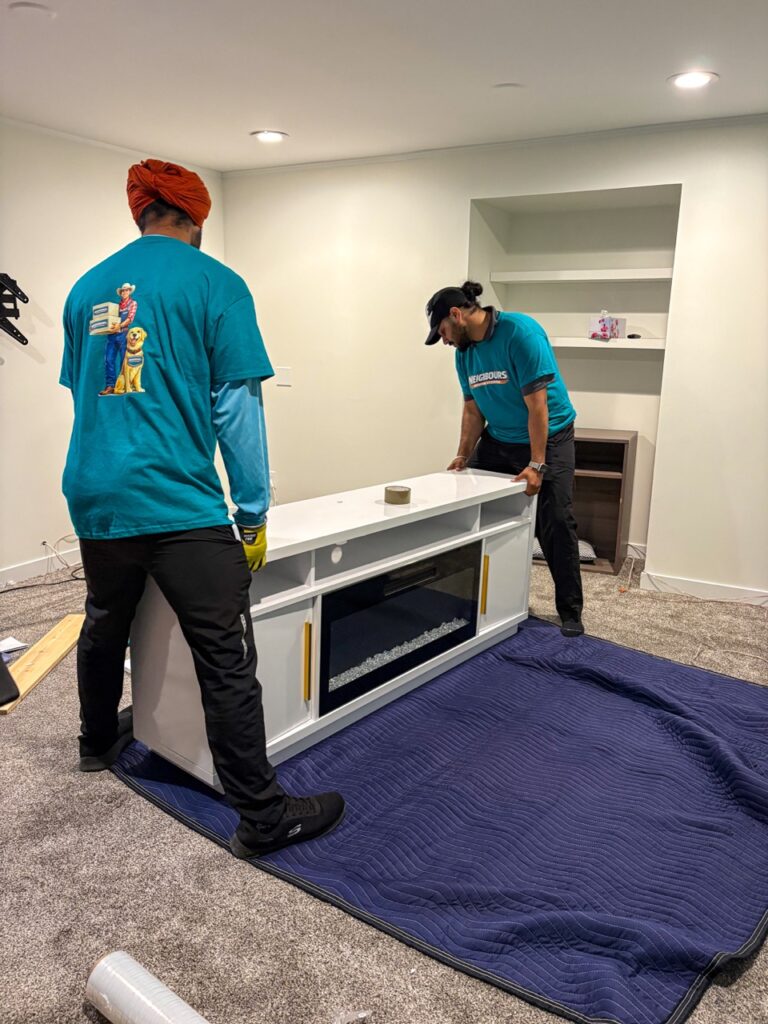
A house move runs on your schedule. A condo move runs on the building’s. You might have movers booked and every box packed, only to learn the service elevator is taken that day or your certificate of insurance didn’t reach the property manager in time.
That’s why experienced condo movers in the GTA start with the building, not the truck. This guide walks you through the rules to confirm, how to book and plan around the service elevator, where the truck will park, and how to time everything so both buildings are ready when you are. Use the checklists below to plan each step, whether you’re moving into, out of, or between GTA condos.
Condo Move Rules to Confirm With Property Management First
Every building sets its own rules, and they can change with a new board or management company. The Condominium Authority of Ontario explains how condo rules work in Ontario.
Contact your concierge or property manager as soon as you have a likely move date, and work through these in order:
- Booking form. Most buildings require a move-in or move-out form before anything else is reserved.
- Permitted days and hours. Many condos allow moves only on certain days and within set hours. Some restrict Sundays or holidays.
- Elevator reservation. This is usually tied to the booking form, so you often can’t lock in a time slot until the form is accepted.
- Deposits or fees. Some condos charge a move fee, a refundable damage deposit, or both. Ask how it’s paid and when it’s returned.
- Certificate of insurance (COI). Many buildings ask your moving company for a COI, a document from the mover’s insurer confirming liability coverage. The building often needs to be named on it. Ask for the exact wording and the deadline to submit it.
Questions to Ask Your Building
- What days and hours are moves allowed?
- How long is a standard elevator booking, and can I book two back-to-back?
- Is there a deposit or move fee, and what’s required to get the deposit back?
- What exactly must the certificate of insurance say, and who should it go to?
- Where should the truck park, and is there a loading dock?
Moving Condo to Condo? Use One Checklist for Both Buildings
When you’re leaving one condo and moving into another, you’re managing two sets of rules on the same day. Track them side by side so nothing slips:
| Item | Building you’re leaving | Building you’re moving into |
|---|---|---|
| Move form submitted | ☐ | ☐ |
| Elevator booked (date and time) | ☐ | ☐ |
| COI sent to management | ☐ | ☐ |
| Deposit or fee paid | ☐ | ☐ |
| Dock or parking arranged | ☐ | ☐ |
| Keys, fobs, and passes sorted | ☐ | ☐ |
Booking the Service Elevator (and What Happens If You Miss Your Slot)
In most buildings, the service elevator is reserved in fixed time blocks. Staff usually hang protective padding inside, and you may need a special key or fob to hold the elevator on your floor. Once your window ends, the next resident’s move may start right away.
How to Estimate the Elevator Time You Need
Count your elevator loads. One load might be a sofa and a few pieces, or a stack of boxes on a dolly. Estimate how many loads your furniture and boxes will take, then multiply by the round trip time from your floor to the dock, including loading and unloading.
Add a buffer for waiting on other residents or a slow elevator. Higher floors and longer walks from the elevator to your unit add time, so mention both when you ask for a quote.
Book the Elevator Before the Movers
Reserve your elevator slot first, then book your movers for that window. For condo-to-condo moves, leave a realistic gap between the two bookings to account for loading, driving, and traffic.
If Your Window Runs Over or Gets Cut Short
If it looks like you’ll run over, tell the concierge early. They may be able to extend your time if no one is booked after you. If not, ask whether you can book a second slot later that day or the next morning.
If your window is cut short, move the large furniture first. Boxes are easier to move in a follow-up slot.
Parking, Loading Docks, and Truck Access
Where the truck parks affects how long your move takes, so sort it out early.
Loading Dock Reservations
Many condos have a loading dock that must be booked along with the elevator. Confirm that your dock time lines up with your elevator time.
Height Limits on Underground Docks
Some underground docks and garage entrances have low ceiling clearances that a full-size moving truck may not fit through. Ask your property manager for the clearance height and share it with your movers so they can plan the right truck.
When the Truck Has to Park on the Street
If there’s no dock, or the truck doesn’t fit, it may need to park on the street. On busy downtown Toronto streets, bike lanes, streetcar and bus routes, and restricted zones can make this tricky. Rules and permits vary, so check with the City of Toronto or your local GTA municipality ahead of time if you’re unsure what’s allowed on your street.
For a condo move in the GTA, a crew that has worked with tight docks and busy streets can save you a lot of time. If you’d like help planning your move around your building’s elevator and parking rules, call Neighbours Moving & Storage at +1 437-828-1632 for a FREE quote.
When to Schedule Your Condo Move
Weekday mornings often have more elevator availability, and traffic between buildings is often lighter than on busy afternoons.
Month-end and weekends are the busiest times, since leases and closings often line up at the end of the month. Elevators, docks, and movers all book up quickly in both buildings.
Line Up Both Buildings’ Bookings
For condo-to-condo moves, try to book the building you’re leaving for the morning and the building you’re moving into for the early afternoon. That gives your movers time to load, drive, and arrive without rushing either slot.
How Far Ahead to Book
As soon as you have a firm date, contact both buildings and your movers. For month-end, weekend, or summer moves, earlier is better, since elevators and moving companies can fill up weeks ahead.
If you’re still mapping out the bigger picture, our guide to planning a local move across the GTA covers the rest of your timeline.
Packing and Prep Tips for Condo Moves
A condo move rewards careful prep more than most, because every minute in the elevator counts.
- Measure your large items. Check your sofa, bed, and dressers against the elevator, hallways, and doorways in both buildings.
- Take large furniture apart in advance. Remove legs, bed frames, and table tops, and keep the hardware in labelled bags.
- Use uniform boxes. Boxes of the same size stack neatly on dollies and make each elevator trip more efficient.
- Label boxes by room. Movers can drop each box in the right place instead of stacking everything by the door.
- Protect shared spaces. Ask your movers how they protect hallways, lobby floors, and walls.
- Empty storage lockers and parking-level storage. Pack these separately and tell your movers so they can plan an extra stop in the building.
- Plan for packing waste. Some buildings restrict how much cardboard or bulky material goes down the garbage chute or into the recycling room. Ask where empty boxes and packing material should go.
Keep These Out of the Moving Truck
Pack a small bag that stays with you: keys, fobs, parking passes, elevator keys, your booking confirmations, a copy of the COI, IDs, and any important documents. If these end up in a box on the truck, you could be stuck in the lobby.
Photograph Before and After
To protect your deposit, take photos of your unit and the common areas you’ll use before the move starts. Include the hallway, elevator, lobby, and doorframes. Take another set when you’re done. If questions come up later, you’ll have a clear record.
Should You Book Packing and Unpacking Services?
Packing yourself saves money, but professional packing and unpacking services can make sense when:
- Your elevator window is short and every box must be ready on time
- You have fragile items, artwork, or electronics that need proper wrapping
- You need to unpack quickly in a smaller space
A full-service move, where the crew packs, moves, and unpacks, keeps everything on one schedule. If you only need help with part of the job, ask about partial packing for the kitchen or fragile items.
What to Expect on Moving Day
A typical condo moving day follows this order:
- Check in with the concierge. Confirm your booking and pick up the elevator key or fob.
- Protect the route. The crew lays floor protection in your unit and hallway.
- Walk the crew through the unit. Point out fragile items and anything that isn’t coming.
- Load in a planned order. Large furniture usually goes first, then boxes.
- Do a final walkthrough. Check closets, balconies, and your locker, then take your “after” photos.
At the new building, the steps run in reverse. A simple note on each room’s door shows the crew where furniture goes.
What to Look For When Hiring Condo Movers in the GTA
Not every moving company in the GTA is set up for high-rise moves. Whether you’re comparing Toronto movers or a company elsewhere in the region, ask:
- Do you have experience with condo and high-rise moves? Ask about buildings similar to yours.
- Can you provide a certificate of insurance for my building? Confirm they can match your building’s wording and deadline.
- How do you protect elevators, walls, and floors? Look for a clear answer about padding and floor protection.
- How many movers will you send? The crew should be large enough to finish within your elevator window.
- Is the quote clear? It should explain time, crew size, and any possible extra charges.
Tips for Finding Apartment Movers
Apartment movers in the GTA vary a lot in how they handle high-rise moves, so a little research goes a long way.
- Get written quotes from a few companies so you can compare what’s included. Canada’s Office of Consumer Affairs recommends getting estimates from at least three reputable movers.
- Read reviews that mention condos, elevator bookings, or tight spaces.
- Ask how quickly they can send a COI, since some buildings need it days ahead.
- Be cautious with large upfront deposits, and ask what they cover.
Why Local Knowledge Matters
Local movers in Toronto and the wider GTA who handle condo moves regularly tend to ask the right questions about docks, clearance heights, and move windows. They also plan around downtown streets and rush-hour traffic, which helps your move fit inside your booking.
What Affects the Cost of a Condo or Apartment Move
Condo moves are usually priced on time, so anything that adds time adds cost:
- Unit size and belongings: more items, more elevator loads
- Crew size: a bigger crew costs more per hour but finishes faster
- Elevator wait times and a shared or slow elevator
- Floor and carry distance from the elevator to your unit
- Distance and traffic between the two buildings
- Packing services and materials
- Date and time, since month-end, weekend, and summer slots are in higher demand
Apartment movers in the GTA who ask about these details upfront usually give more reliable quotes. For a wider look at pricing, see our breakdown of GTA moving costs.
Frequently Asked Questions
What is a certificate of insurance, and who provides it?
It’s a document from your moving company’s insurer that confirms the company carries liability coverage. The moving company provides it, but your building decides what it must say. Send your building’s requirements to your movers early so there’s time to get it right.
Can I move into a condo on a weekend?
It depends on the building. Some allow weekend moves and some restrict them, especially on Sundays or holidays.
How long does a condo move usually take?
It depends on the size of your unit, how much you own, your floor, and how quickly the elevator runs. Your movers can give you a better estimate once they know the details.
Can I book a last-minute or small condo move?
Often, yes, but it depends on elevator availability in both buildings as much as on the movers. Small moves, like a studio or a few large pieces, are easier to fit into a short window.
Do I get my move deposit back?
In many buildings, yes, as long as no damage is found after the move. Your before and after photos help if there’s ever a question.
Conclusion: Start With the Building, Then Book the Rest
A smooth condo move comes down to order. Confirm your building’s rules first, lock in your elevator and loading dock, and then book condo movers in the GTA who can work within your time window.
When you’re ready, call Neighbours Moving & Storage at +1 437-828-1632 to request a FREE quote. With 2,000+ moves completed every year, we’ll help you plan around your building’s rules, from elevator windows to parking. Book early, especially for month-end and weekend moves, so your move date lines up with your elevator and loading dock reservations.